
Can an Atheist Get Sober in a 12-Step Program?
Navigating the Wide Road to Recovery

For countless people standing on the threshold of addiction recovery, walking into a 12-step meeting for the first time is terrifying. But for an atheist, an agnostic, or anyone who has been burned by organized religion, seeing the word “GOD” plastered across the walls can feel like running face-first into a brick wall.
The knee-jerk reaction is almost universal: Nope. This isn't for me. We back away, assuming that staying sober requires accepting rigid religious dogma, submitting to an authoritarian deity, or adopting a belief system that fundamentally conflicts with who we are.
It is one of the most common reasons people turn around and walk right back out the door, staying trapped in the chaos of active addiction. But does a lack of religious faith mean you can't get sober in a traditional 12-step program? What about those who are atheists or simply don’t know what to believe? Is there any hope for them in the "rooms" of recovery?
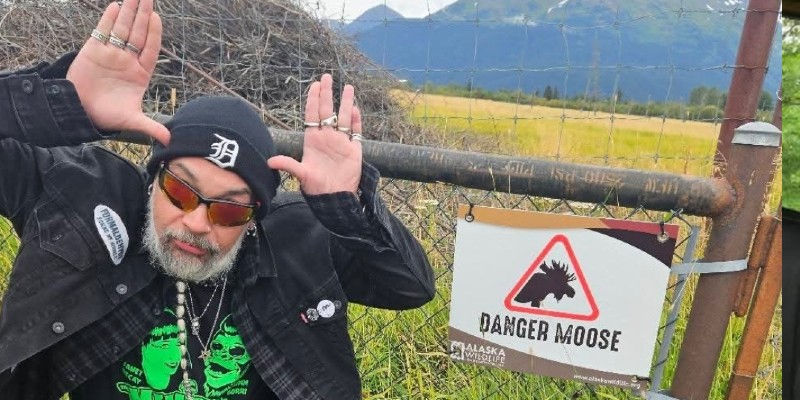
To answer that, I reached out to my friend J Michael, co-host of the award winning podcast Sober Not Mature. He found sobriety in the rooms and has been sober since April 22, 2010—and he is a staunch, unapologetic atheist.
His perspective, combined with my own journey in recovery, proves that the "God thing" doesn't have to be a barrier. In fact, clinging to our rebellion against it might be the very thing keeping us sick.
Secular 12-Step Recovery: Overcoming the Fear of the "God Thing"

Before finding solid ground in recovery, J Michael's life was a noise-filled whirlwind. In his earlier years, he lived the wild life of a glam-punk/trash-rock musician, fueled by booze, pot, and speed. Later, he spent years behind the wheel of a big rig, using heavy drinking to numb out. It wasn't until a dangerous incident on the road made him realize he was going to kill someone—or himself—that he knew he had to stop. Yet, like so many non-believers, he was terrified that the 12-step "God concept" was going to be an insurmountable hurdle.
I related to that fear on every level. Early on, I completely mistook the need for spirituality as a demand for religion. The second I heard words like "Higher Power," "discipline," or "submitting my will," my inner rebel dug her heels in. I didn't want anyone telling me what to do, and I certainly wasn't about to bow down to a traditional concept of God that felt completely alien to me.
So, I did what so many of us do: I tried every other possible way first.
I bargained, I made rules, I tried to manage it, and I fought tooth and nail to keep control. But that sense of control was a facade. In reality, it was long lost, and we had become slaves to things that were slowly killing us and stealing everything good we might possibly have. That fierce rebellion only kept me sick. It took years of suffering to finally realize a brutal truth: my way wasn't working. When you’re standing in a church basement, broken and exhausted, refusing to try a program simply because of a word on the wall is an expensive kind of pride. As J Michael points out, 12-step literature nails this exact human flaw:
“There is a principle which is a bar against all information... That principle is contempt prior to investigation.”
"Why rob yourself of things you can't even imagine, just because you won't give yourself the gift of open-mindedness?" he asks. "If you're standing in that church basement reading 'that word' on the wall, 'your way' probably isn't working too well. It might be time to give another way a try."
What I Actually Got Wrong About the "God Thing"

Looking back, my entire resistance wasn't based on truth—it was built on three massive misconceptions:
What I thought it required: Submitting to an authoritarian, religious deity and adopting rigid dogma.
What it actually required: Admitting I was no longer running the universe and letting go of my own ego.
What I thought I was protecting: My independence, freedom, and personal identity.
What I was actually protecting: Misplaced pride that kept me trapped in active addiction.
What I thought I needed to start: A deep, spiritual faith or belief system.
What I actually needed to start: Just a tiny drop of open-mindedness and willingness to try something new.

Religion vs. Spirituality in Recovery: Defining Your Own Higher Power
The turning point for both of us came when we realized that religion and spirituality are not the same thing:
Religion is a set of specific beliefs, doctrines, and dogmas dictated by an institution.
Spirituality is simply a personal, internal connection to something—anything—outside of your own ego.
You do not need religion to work a 12-step program. What you need is the willingness to accept a simple, foundational premise: There is a power greater than you in this universe, and—most importantly—YOU are not it.
When J Michael first walked into the rooms terrified of the "God thing," he did one of the bravest things anyone in early sobriety can do: he was open about his fears. As a result, he received a piece of advice that changed everything:
"An old-timer told me that it didn't matter what my Higher Power was," he recalls. "I just had to know that it wasn't me anymore. It was a place to start, without any of my preconceived notions."
Rather than forcing himself into a religious framework, he built his concept of a Higher Power out of things that were real, tangible, and meaningful to him:
Music & Love: "My first epiphany was going back to my basics: Rock and Roll. The Beatles sang, 'All You Need Is Love.' Love is a positive power greater than myself—mysterious, unexplainable, yet undeniably powerful."
Pure Grace: Soon after getting sober, his two-year-old granddaughter looked at him with pure affection. "The look of love in her eyes—something I certainly didn't deserve at the time—was pure grace. It provided me with faith that there was more to all of this world than my selfish desires."
The Group: In 12-step circles, "G.O.D." can simply stand for Group Of Drunks—the collective strength, wisdom, and support of people walking the exact same path.

Today, while others in church basements recite traditional prayers, he quietly sings "All You Need Is Love" in his head. He didn’t compromise his atheist beliefs; he adapted the tools to fit his truth.
Sobriety Without Religion: What Drives the "Personality Change" Without God?
In Alcoholics Anonymous, Appendix II defines a spiritual experience simply as a "personality change sufficient to bring about recovery." For believers, a Higher Power is the engine behind that transformation. But for an atheist sitting in a church basement, what actually fuels that massive internal shift? When you don't look to divine intervention, where do you find the momentum to dismantle your ego and rebuild your character from scratch?
For J Michael, that deep behavioral transformation wasn't sparked by a sudden epiphany, but by a blunt, pragmatic realization: his own ego was running—and ruining—his life.
Rather than relying on traditional religious concepts, he powered his personality change through three real-world anchors: Love (actively making his corner of the world better), Principles (practicing recovery ethics in all affairs), and G.O.D.—an acronym he defines as the Group Of Drunks.
By anchoring his daily actions to the collective strength of the recovery community and living in active service to others, his Higher Power became tangible, human, and real. It gave him a practical framework for integrity in everyday life.
As J Michael puts it: "Whatever power greater than yourself that you do find, you HAVE to be a part of it, and you HAVE to do its work."

How to Stay Sober While Traveling: Habits for the Road
Once you lay down the heavy burden of addiction and stop fighting the "God thing," your world gets infinitely bigger. For travelers in recovery, the freedom that comes with sobriety is staggering.
Moving from looking at the world through the windshield of a big rig to intentionally curating his own travels, J Michael says the biggest shift has been pure, unadulterated clarity.
"I get to actually remember my experiences today, and more importantly, I get to curate them," he explains. "I don't have to wonder if there's a bar nearby or how to get a bag of whatever from one point to another. I get to pick and choose exactly what I want to do. Why even bother to leave your house and see the world if you're not going to truly take what the world has to offer?"
When it comes to navigating environments that might traditionally be considered risky—like resorts, parties, or vacations—he takes a refreshingly direct, no-nonsense stance:
"First off, I don't believe in triggers. I think that they're simply excuses."
Rather than leaning on the idea of external "triggers" to justify a slip or a bad mood, he focuses on personal responsibility and non-negotiable daily habits. Wherever he travels, he carries his meditation books to start his day and makes his bed every morning—establishing a sense of order regardless of his environment.
And when discomfort does creep in, staying grounded comes back to simple human connection. J Michael shared a moment from an early trip to Mexico that perfectly illustrates how an unexpected interaction can shift your whole mindset:
"The first time I went to Mexico, to an all-inclusive, I did become a bit uncomfortable. I was around seven years sober, and I didn't think being in that environment would bother me, but it did a little. I certainly didn't want to get drunk, but I was just a little 'off'. The second night, we were at one of the restaurants having dinner, and I declined a drink with my order (of course the waiter asked), and the couple at the next table overheard, and the husband said that he was sober too. A brief, simple exchange, but it reminded me that I wasn't alone, and I've never had even a twinge of that uncomfortableness ever again."

Meeting another sober person at a resort in Mexico was a simple reminder that recovery doesn't happen in isolation. Today, J Michael helps create that same lifeline for others through his Friday night podcast.
What began as two friends shooting the breeze in a sober environment transformed into a platform to reach people who might feel isolated in their own journey. For J Michael, it’s all about spreading a message of peace and freedom—showing listeners that sober living isn't about restriction, but discovering that our only real limitations are the ones we place on ourselves.
Best of all, as an atheist, experiencing deep, breathtaking awe while traveling doesn't require a supernatural explanation:
"I don't need (nor believe in) the supernatural or metaphysical," he says. "The natural and physical world are pretty amazing all by themselves. Whether it's the mountains in Alaska or the moon rising over the skyline of Cleveland, I get to be fully present and truly appreciate the grandeur of our planet."

The Wide Road to Recovery: Why Secular Sobriety Works
Recovery isn't about giving up your identity, bowing to a religion you don't believe in, or pretending to be someone you're not. It is an inside job. The 12 Steps are merely guide rails designed to keep you from driving off the cliff, but the road is wide, and you are the one holding the steering wheel.
If you are standing on the outside looking in, terrified that your lack of faith disqualifies you from getting sober, take a breath. Drop the rebellion. You don't need a cathedral, a pulpit, or a traditional God. You just need to accept that you can't do it alone—and be willing to let something bigger than your own ego help you up off the floor.
As J Michael reflects on over a decade of continuous sobriety:
"This way of living is far superior to the way I thought I had to live. Yes, there is responsibility, accountability, and work to be done, but the rewards and the freedoms are vastly better than the self-imposed prisons of our misplaced egos and urges. Early in sobriety, I was asked what I thought my life would be like after a year or so of being sober. I can't begin to tell you how short I sold myself."
Don't sell yourself short. The road to recovery is wide enough for everyone—atheists included.
Want to hear more honest, raw, and humorous conversations about secular recovery, life, and travel? Tune in to Sober Not Mature, where Mike & Bill break down the noise and prove that living sober is anything but boring!
Ready to travel the wide open road? Sobriety opens up a whole world of freedom, but planning a trip that aligns with your needs, comfort level, and pace can feel overwhelming. Whether you’re embarking on your first sober vacation, planning a solo adventure, or looking for an accessible getaway, you don’t have to figure it out by yourself. As an independent travel advisor, I craft custom, stress-free itineraries tailored entirely to your journey.
Don't Wander Alone!
Join one of our Wandering Weightlessly communities to connect with like-minded travelers, share local hidden gems, and find support for every step:
Suitcases & Sobriety: A sober travel collective - A sober travel collective for the sober and sober-curious.
Friends of Bill W Cruising - 12 step Cruise community
Friends of Bill W Travel - 12 step travel community
The Connected Compass - A trauma-informed travel collective for families who need a different kind of map.


Thank you for such a great read and being my friend!❤️
Once again, thank you for letting me a part of. I hope it helps someone find their path.